
Emergency Water Removal in McKinney, TX
A supply line that let go upstairs, a water heater that gave out in the garage, or an appliance overflowing across the floor right now. Call and the crew lead picks up, day or night, and starts extraction before the water travels further.
📞 Call (972) 764-8722 Now ★★★★★ 5.0 rating on GoogleYou walked into the kitchen and the floor was already shining, or the ceiling under the upstairs bathroom started to sag and drip onto the couch. By the time water shows itself like that, it has usually been traveling through the house for a while, and every hour it sits now is more flooring and drywall that has to come out later. Call and whoever's on shift picks up, day or night, tells you what to shut off and what to lift out of the way, and gets a crew loaded up for your address before you've finished explaining the mess.
What you're dealing with is a water removal job, which is its own thing. It is not the outdoor flood cleanup a hard storm leaves behind, and it is not a sewage backup off a failed drain. It means getting standing water off the floor and out of the structure underneath it, then drying what's left before rot or mold gets a foothold.
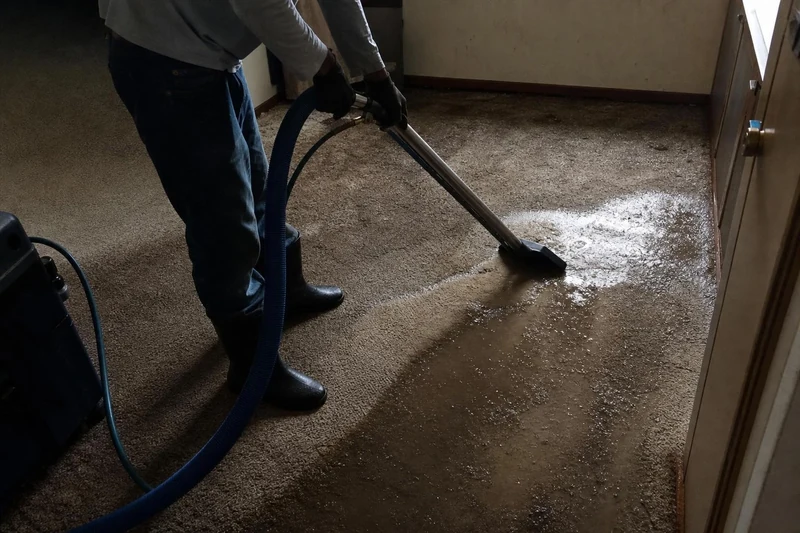
Two Machines Before the Real Drying Starts
Getting the standing water out is a two-step job, and skipping either step is how a wet Tuesday turns into a mold problem by the following weekend. A truck-mounted extraction unit handles the bulk of it first, pulling gallons off tile, hardwood, and vinyl faster than a shop vac ever could. Once the visible water is gone, portable extractors go to work on carpet, pad, and any upholstered furniture that soaked it up, because carpet holds water the truck-mount can't reach.
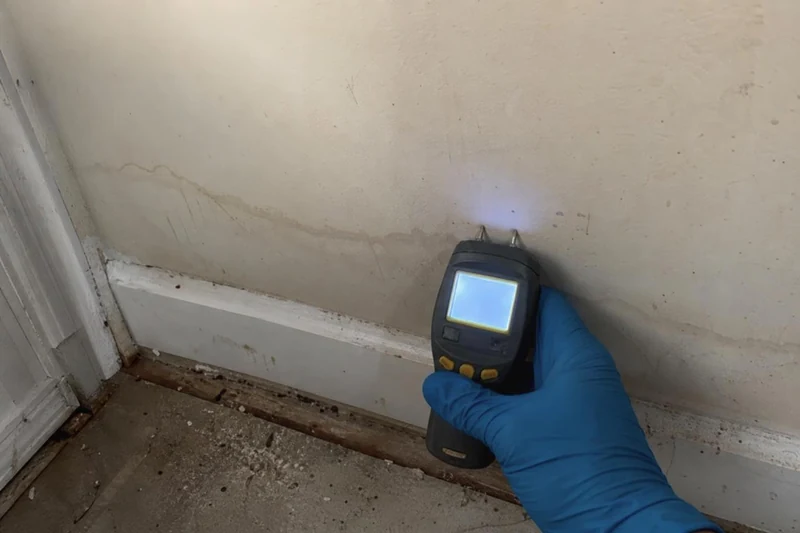
Only after both extraction passes is the structure actually dry enough to start structural drying. Air movers and dehumidifiers get positioned according to where the moisture meter says the water traveled, not where the stain is visible, because water extraction in a home rarely stops exactly where you can see it. That's the difference between water mitigation done right and a job that just moves fans around until the room smells okay.
What You Can Do While We're Still En Route
The first hour after you find water on the floor decides how much of your house stays original. If it's safe to reach, shut off the water at the fixture or at the main, whichever stops the flow faster. Lift rugs, furniture legs, and anything on the floor that can absorb water onto something dry, and stay off any soaked flooring near an outlet or a power strip until someone tells you it's safe.
None of that replaces a crew, but it buys time. Whoever answers the phone stays on with you, walks through what's safe to touch and what to leave alone, and keeps you posted on how close the truck is. That's the point of calling immediately instead of waiting to see if it dries on its own: water removal that starts in the first hour is a smaller job than one that starts the next morning.
A McKinney Slab Hides Water Longer Than You'd Guess
Almost every home in McKinney sits on a concrete slab, and water doesn't respect the boundaries you can see on top of it. Once it gets under a baseboard it starts wicking up into the drywall from the bottom, and by the time it reaches the far wall of a room, the carpet at the point of entry can already look dry to the touch. That's the trap: dry to the touch and dry to a moisture meter reading are two different things, and only the second one means the drying is actually finished.
The houses tell different stories depending on where you are. Around Historic Downtown McKinney and the 75069 streets, older slab foundations and decades-old supply lines mean a slow drip behind a wall can go unnoticed for weeks before it shows up as a soft spot in the flooring. Out in the newer 75071 and 75070 builds like Trinity Falls and Craig Ranch, two-story floor plans put a bathroom or laundry line directly over finished living space, so a failed valve upstairs becomes a ceiling and flooring job downstairs within the hour. Stonebridge Ranch, which straddles 75070 and 75072, sees both patterns depending on which phase of the neighborhood you're in.
North Texas humidity doesn't do you any favors either. Water that would air out on its own in a drier climate just sits in the wall cavity here, which is exactly the setup mold needs. Heavy rain adds another layer: parts of McKinney sit in the drainage areas the city tracks through its own stormwater management program, and a hard summer storm can push ground-level water into a garage or low entry point on top of whatever's already happening inside. Extraction and structural drying together are what actually close that gap, not just pulling out what's visible on day one.
Where These McKinney Calls Usually Start
The failures follow a pattern, and it helps to know what you're watching for even when nothing's wrong right now. A supply line or shutoff valve tucked behind a wall or under a sink is the most common one, because those fittings age quietly until they don't. Water heaters are the other repeat offender, especially units sitting in a garage or utility closet that finally rust through and empty their tank across the floor with no warning.
January cold snaps add a seasonal wrinkle. A hard freeze can burst a pipe on the exposed side of a two-story home, and the resulting water damage cleanup often starts on an upper floor and works its way down through the ceiling below. Appliance lines fail too, usually the dishwasher, washing machine, or refrigerator, and a slow leak behind one of those can run for days before anyone notices the flooring has gone soft.
Between all of it, the causes we see most often are:
- A supply line or valve failure behind a wall or under a sink
- A water heater rusting through in a garage or utility room
- A frozen pipe bursting during a hard winter cold snap
- A dishwasher, washing machine, or refrigerator line overflow
- Storm water pushing in at a garage or low entry point
Whatever started it, the job is the same from there: get the water out, dry the structure to a real reading, and document it all for your insurance company as we go, with photos and moisture logs instead of guesswork after the fact. If standing water sits long enough to turn into a mold problem, that's a separate call, but fast water removal now is what keeps it from getting there. Water removal is just one piece of what the team behind every water damage call in McKinney handles day to day, alongside flood, sewage, fire, and mold work under the same roof.
Questions We Get on the Phone
Where to Find Us in McKinney TX
No phone tree when you call, and we give you a straight arrival window before we roll.
Standing Water Right Now? Call and We Start Extraction.
The crew lead answers, not a call center, and gets water pulled out and the structure drying before it spreads into more of your home.
📞 Call (972) 764-8722