
Mold Removal in McKinney, TX
A musty smell behind a closet wall, staining under the bathroom sink, or a spot that keeps coming back no matter how many times you've wiped it down. Once your own assessor has written the protocol, call and we get a crew scheduled to carry it out.
📞 Call (972) 764-8722 Now ★★★★★ 5.0 rating on GoogleYou pulled back the access panel under a bathroom sink in a home near the older 75069 core, or maybe it was just a musty smell coming from a hall closet in a newer 75071 build, and either way the staining behind the drywall was worse than you expected. Before anyone puts a scraper or a HEPA vacuum near that wall, Texas has a rule that actually works in your favor: the person who tells you how bad it is and writes the plan for fixing it cannot be the same company that does the fixing.
That's not us being difficult. State law requires an independent, TDLR-licensed mold assessor to inspect the area, test what needs testing, and put the scope and a written protocol together before a job of any real size starts, and that assessor has to be a separate party from whoever performs the removal. We're that second party. Bring us the assessor's report and protocol, and our crew carries it out: containment, removal, cleaning, and dealing with the moisture that let the growth start in the first place. Search around for mold removal in McKinney and you'll notice the same split everywhere, inspection and testing companies on one side, remediation crews like ours on the other. That split is deliberate. The law sets it up that way to protect you from a company grading its own homework.
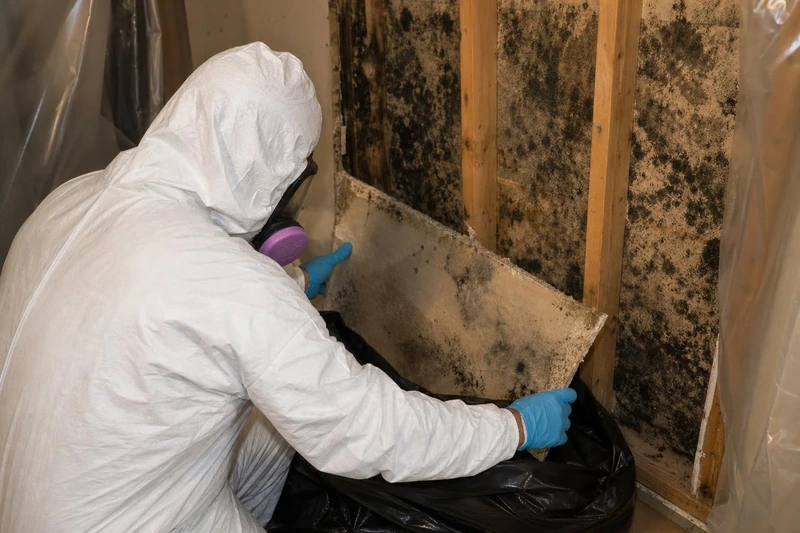
Containment First, Then the Moisture Source
Once you hand over the protocol, the work follows what it specifies. Plastic sheeting seals off the work area and cuts it off from the rest of the HVAC system, and negative air machines running HEPA filtration keep spores from riding the pressure difference into a hallway or a bedroom while the job is open. None of that is optional, and none of it happens before the containment is actually up and holding.
Removal comes next, and it means cutting out whatever the report flags as colonized, not spraying a surface product over it and calling the job done. Drywall, insulation, and baseboard that can't be cleaned get pulled out and bagged for disposal, framing that can be saved gets cleaned and treated, and everything left standing gets HEPA-vacuumed and wiped to the standard the protocol sets, not to whatever looks clean under a work light.
None of that holds if the water behind it is still active. If a leak is still feeding the area, our emergency water removal crew pulls that water out and gets the space drying at the same time we're removing growth, so the two jobs finish together instead of the drying getting skipped.
Mold Doesn't Show Up Without a Water Problem First
Every mold call we get traces back to water that sat somewhere longer than it should have. McKinney sits on a slab with no basement to catch a leak and hold it in one place, so moisture from a slow slab leak or a sweating AC line in the attic works sideways under flooring and up into a wall cavity long before anyone notices a smell. Collin County's stretch of North Texas humidity makes it worse, because water trapped in a wall here doesn't dry back out on its own the way it might in a drier climate. It just sits, and mold gets a head start while nobody's looking.
The pattern shifts depending on where you are. Around the older streets near Historic Downtown McKinney, inside 75069, a slow supply-line drip behind a bathroom wall can run for months before the smell finally gives it away, decades-old plumbing failing quietly instead of all at once. In Tucker Hill, which spans both 75069 and 75071, an appliance line or a shower pan that was never quite sealed right does the same thing on a faster timeline. Eldorado, which spans 75070 and 75072, backs onto irrigated golf course frontage on its west side, and homes along that edge pick up grade level moisture from sprinkler overspray hitting the same stretch of exterior wall all summer, no plumbing failure involved. If a burst pipe or an appliance overflow is what started your problem, that's a call for extraction and drying before it ever reaches this point, not remediation after the fact.
What a Texas Homeowners Policy Actually Covers
The insurance question comes up on almost every call, and the honest answer is messier than most people expect. Coverage is never automatic. Plenty of Texas homeowners policies limit or exclude mold damage outright, and even where coverage exists it usually only applies when the mold traces back to a sudden, accidental event, a supply line that let go overnight, not a slow leak nobody caught for months. The Texas Attorney General's consumer guidance on mold remediation lays out that distinction plainly, and it's worth reading before you call your adjuster, because your specific policy language decides the outcome more than any general rule does.
That's part of why the assessor's report matters beyond just naming what's growing. A written protocol that ties the mold back to a specific, datable event gives an adjuster something concrete to work from instead of a guess made after the fact. We don't handle the claim conversation for you the way a public adjuster would, but the mold remediation work we carry out gets documented as we go, so whatever your assessor and your carrier decide, the record of what was actually removed and cleaned is solid.
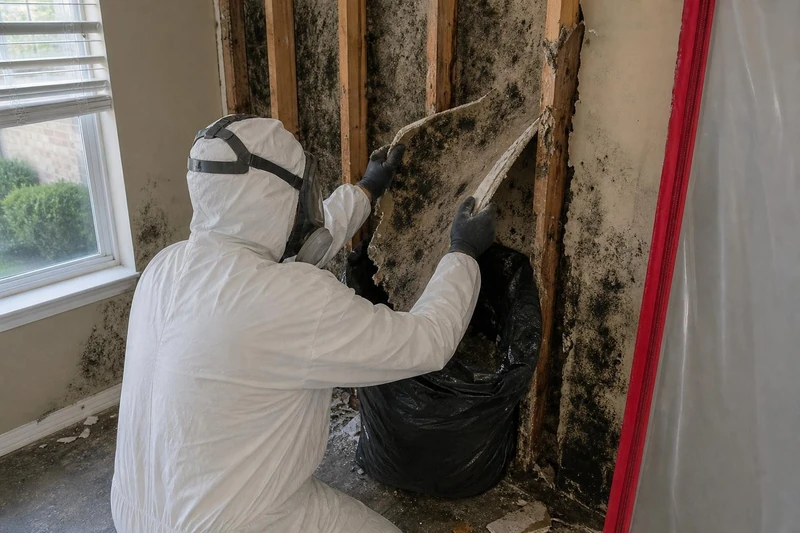
Why a Surface Wipe-Down Doesn't Actually Fix It
Bleach and a rag handle what you can see on a bathroom tile, but they don't touch what's behind the drywall or up inside a wall cavity, and that's true whether you're dealing with a light gray bloom or full black mold spreading across a baseboard. DIY cleanup treats the surface and leaves the moisture source and the hidden growth exactly where they were, so it's usually just a matter of time before growth shows up in that same spot again.
Coming back after a job finishes isn't about the removal being incomplete, it's almost always about the water. If the moisture that fed the growth never got addressed, whether that's a slab leak still wicking upward or attic ventilation letting condensation build behind a ceiling, new growth has the same conditions to work with that the old growth did. That's why our part of the job pairs removal with drying the area to a real moisture reading, the same standard the McKinney crew behind every restoration call holds whether the water came from a storm, a supply line, or the leak that started your mold problem.
Questions McKinney Homeowners Ask Before They Call
Where to Find Us in McKinney TX
No phone tree when you call, and we give you a straight arrival window before we roll.
Where We Work in McKinney
McKinney ZIP codes we cover include 75069, 75070, 75071, 75072.
Neighborhoods we serve across McKinney include Tucker Hill, Stonebridge Ranch, Auburn Hills, Craig Ranch, Historic Downtown McKinney, Eldorado, and all other McKinney neighborhoods.
Have Your Assessor's Report? Call and We'll Schedule the Crew.
Whoever's on shift walks through what the protocol calls for and gets remediation scheduled, day or night.
📞 Call (972) 764-8722