
Sewage Cleanup in McKinney, TX
Water backing up through a floor drain or a toilet that keeps refilling with dark water no matter how many times you flush is contaminated from the first drop, and it keeps spreading the longer it sits.
📞 Call (972) 764-8722 Now ★★★★★ 5.0 rating on GoogleMost of the time the smell reaches you first, then you notice the water rising back up through a floor drain, or hear the toilet keep refilling with the same dark water no matter how many times you flush it. Unlike a supply line letting go, this water carries bacteria and waste from the moment it touches your floor, and every minute it sits soaking into a baseboard or a rug is contamination working its way into rooms that were clean an hour ago. This is not a job for a mop, a shop vac, and open windows. Call and a real person walks you through what to shut off and who to keep out of the room while a crew heads your way, any hour it happens.
What is coming up through your drain is category three water, contaminated on contact, and that puts it in a different category than the clean supply-line water our emergency water removal crew handles or the outside runoff that shows up after a storm pushes water through a door, which is its own flood damage restoration call. A backup means containment first, then extraction, then a level of cleaning and disinfecting that neither of those jobs requires.
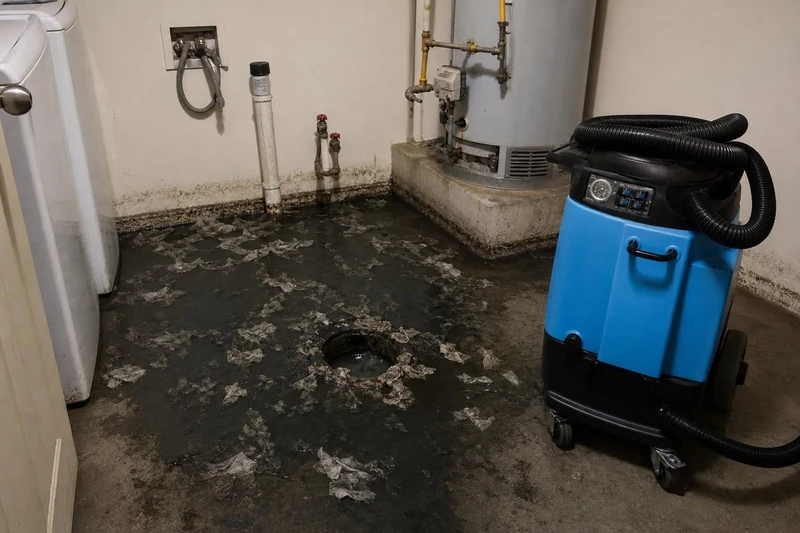
Why This Isn't a Mop and Bucket Job
Sewage backing up a drain is contaminated water from the source, not just wherever it happens to pool. Bacteria, waste, and whatever the sewer line was carrying end up on flooring, baseboards, and anything porous the water touched, and no amount of surface cleaning changes that. Category three is the industry's own label for it, and the label matters because it signals a real health risk, one that a standard cleanup does not address.
Porous materials are the clearest example of why this needs a crew instead of a weekend project. Carpet, pad, drywall that wicked water up from a baseboard, insulation behind a wall, none of it can be cleaned back to safe once category three water has soaked in. It has to come out, not get dried in place the way a clean-water leak might be handled. A wet vac and a bottle of disinfectant leave contamination behind that a trained crew and a moisture meter are built to catch, and you are not.
Containment Through Disinfecting, In Order
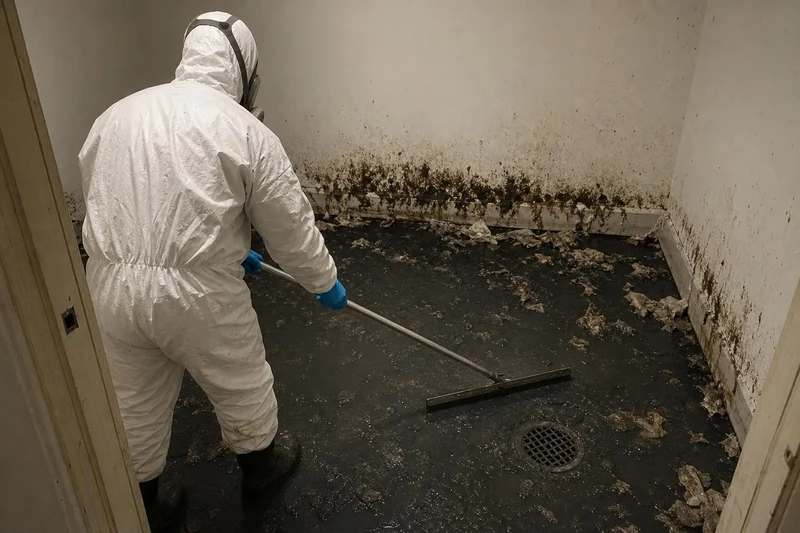
Once the crew is on-site, the affected room gets contained first, sealed off so nothing tracked through it spreads contamination further into the house. Extraction of the contaminated water comes next, pulled off the floor and out from under it with the same truck-mounted and portable equipment used on any standing-water call, except everything that touches this water gets treated and disposed of as contaminated.
From there it's a removal pass. Carpet, pad, baseboards, and any drywall that soaked up backup water get pulled and hauled out, because those materials cannot be salvaged once category three water has been inside them. What's left, the hard surfaces such as tile, sealed concrete, and framing, gets cleaned and then disinfected, not just wiped down. Only after disinfecting does drying start, air movers and dehumidifiers running until a moisture reading says the structure is actually dry, not until it looks dry underfoot. The last step is deodorizing, because sewage odor lingers in a room's air and its materials well after the visible mess is gone, and skipping that step is how a finished-looking job still smells like the backup that caused it.
Keeping people and pets out of the affected area matters from the moment you notice the backup, before a crew ever arrives. Do not run water or flush anything upstream of the blockage, that just adds more contaminated water to a space that already has too much. Open a window if you can for ventilation, and avoid direct contact with the water or anything it touched until someone with the right equipment is handling it.
What Starts a Backup in a McKinney Home
A handful of patterns show up again and again across McKinney and the rest of Collin County, Texas. A clogged or collapsed main line is the most common trigger, the kind of blockage that pushes water back up into the lowest fixture in the house, usually a floor drain, a tub, or the toilet closest to the yard. Around Historic Downtown McKinney and the older streets inside 75069, decades-old sewer lines run through soil with root systems from mature trees, and a root intrusion that started small years ago finally chokes the line during a wet stretch.
Heavy rain plays its own part. A hard summer downpour can push more water into the municipal sewer system than it was built to carry, and the National Weather Service's Fort Worth office tracks just how often North Texas sees that kind of rainfall intensity hit in a single afternoon. When the system backs up under that load, the water has to go somewhere, and the lowest drain in a McKinney house is often it.
Slab construction adds a wrinkle of its own. Newer sections of Trinity Falls in 75071 and Tucker Hill spanning 75069 and 75071 sit on the same slab foundations as the rest of McKinney, and a floor drain in a garage or utility room marks the low point of that slab. When the line backs up, that drain is often the first place it shows, sometimes before anyone notices a problem with a fixture upstairs. Homes around Eldorado, split between 75070 and 75072, see the same floor-drain pattern in garages built at grade.
What We Handle and What's a Plumber's Job
A sewer backup usually raises an insurance question before it raises a repair one. Standard homeowners policies often treat sewer and drain backup as an exclusion rather than something automatically covered the way a burst supply line might be, unless a backup or sump endorsement was added to the policy. That's between you and your carrier, and we are not going to tell you what your policy says either way, but it is worth a call to your agent before you assume anything.
One thing stays outside our scope entirely: the pipe itself. If a collapsed pipe or a root intrusion caused the backup, fixing that line is a plumber's job, not ours, and we will tell you plainly when that's what's needed instead of pretending otherwise. Our end is everything the backup left behind: containment, contaminated-water extraction, sewage removal of what cannot be saved, cleaning and disinfecting what can, drying it to a real reading, and getting the odor out. Hand us the aftermath and we will handle our half of it right, whether the plumber's fix happens before or after our crew finishes. That's the same standard McKinney's full-service restoration crew holds across water, flood, fire, and mold calls too.
Sewage Cleanup Questions From McKinney Homeowners
Where to Find Us in McKinney TX
No phone tree when you call, and we give you a straight arrival window before we roll.
Sewage Backing Up in Your McKinney Home? Call Now.
Whoever's on shift gets a crew moving to contain the backup before it reaches more of your house, nights and weekends included.
📞 Call (972) 764-8722