
Flood Damage Restoration in McKinney, TX
Runoff from a hard storm pushing in at a garage or low entry point instead of a pipe that let go inside? Whoever's on shift gets a crew moving on extraction and drying, no matter what time the call comes in.
📞 Call (972) 764-8722 Now ★★★★★ 5.0 rating on GoogleFlash Flood Runoff Is a Different Call Than a Burst Pipe
Water pooling across the garage floor after a hard afternoon storm is a different situation than a supply line letting go under the sink, even though both leave you standing in water at ten at night wondering who to call. When runoff from outside pushes past a door threshold or up through a low garage entry, that water picked up whatever it crossed on the way in, lawn treatment, driveway residue, whatever had settled in a storm drain for a season. A burst pipe or a failed water heater is clean water starting from inside the house, and a sewage backup is contaminated water from a failed drain line. Flood damage sits in its own lane: ground level water that arrived from outside during a storm, and it gets handled on its own terms, not folded into either of those other two calls.
McKinney's fastest growth over the last decade has been rooftops, driveways, and parking lots replacing what used to be pasture that soaked up rain on its own. Less open ground means storm water has fewer places to go besides the nearest low street or creek bank, and the National Weather Service's Fort Worth/Dallas office lists flash flooding among the more frequent warnings it issues for exactly this kind of fast draining terrain. A summer cell that would have soaked into open ground twenty years ago now reaches a foundation a lot sooner, and that is the flood cleanup call we get most.
Outside Water Doesn't Get Treated Like a Clean Leak
Not every wet material in a flood affected room gets the same treatment, and the reason comes down to what that water carried with it. Water that traveled across a yard, a driveway, or a street picks up more than a supply line leak ever will, so porous materials that soaked it up, drywall low on the wall, baseboard, carpet pad, insulation, typically have to come out rather than dry in place. Hard, sealed surfaces like tile and most cabinetry can usually be cleaned, sanitized, and dried instead of replaced.
That distinction is also why flood damage cleanup and a straightforward water removal job look different from the outside even though both end in dry, documented rooms. A clean water call from a failed line can often dry in place, start to finish. A flood call usually means removing what can't be salvaged first, then drying and sanitizing what's left, then documenting both the removal and the drying for whoever reviews your claim.
How the Cleanup Actually Runs
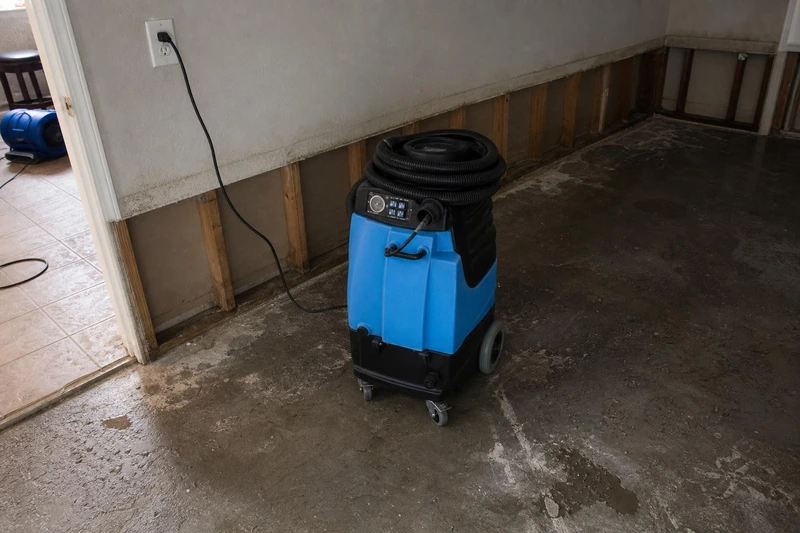
Standing water comes out first, pulled off the floor and out of the structure with the same extraction equipment whether it's an inch across a garage slab or several inches through a first floor. Whatever soaked it up and can't reasonably be saved, wet baseboard, ruined carpet pad, waterlogged insulation, comes out next, because leaving contaminated material inside a wall cavity to dry defeats the point of drying it at all.
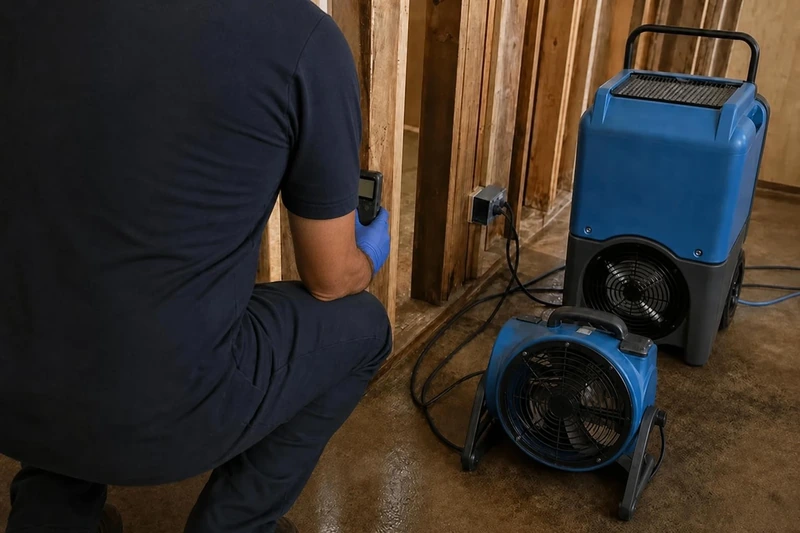
Once the structure is clear of what has to go, the surfaces and framing that remain get cleaned and sanitized, and air movers and dehumidifiers take it from there. A moisture meter reading on the subfloor and wall cavity is what calls the equipment off the job, the same standard applied on every job here. Photos and moisture logs get built into a file as the work happens, not put together afterward, so your claim rests on a real record. Call any hour, day or night, and a real person walks you through what to do before a crew is even on the road.
Homeowners Coverage and Flood Coverage Aren't the Same Policy
Here's the distinction that catches a lot of McKinney homeowners off guard: a standard homeowners policy typically excludes surface flooding, meaning water that entered from outside during a storm. Coverage for that kind of loss usually falls under a separate National Flood Insurance Program policy, its own product with its own terms. A sudden, accidental water release from inside the house, a burst pipe or a failed appliance line, is generally the kind of loss a standard homeowners policy is built to cover.
None of that is advice on your specific policy, and we're not the ones to interpret your declarations page for you, that's a conversation for your agent or adjuster. What we can do is document the loss thoroughly while the work happens, photos, moisture readings, a record of what came out and why, so whichever policy applies has the evidence behind it that it needs.
Where Flood Water Collects Across McKinney
Almost every home in McKinney sits on a concrete slab with no basement, so once floodwater crosses a threshold it spreads sideways under the flooring instead of pooling in one low spot the way it might in a house with a crawl space. That means the wet zone you see on day one is rarely the full extent of it, especially in older stretches of Collin County, Texas where original slab work and yard grading predate the stricter standards newer subdivisions are built to now.
The pattern shows up differently depending on where you are. Around Historic Downtown McKinney in 75069, older lots and mature trees change how water sheets across a yard toward the street. Out in Stonebridge Ranch, which spans 75070 and 75072, and Craig Ranch in 75070, newer grading generally moves storm runoff away from the house, but a garage sitting at the low point of a driveway can still take on water fast during a heavy cell. Trinity Falls in 75071 is newer still, and even a fresh subdivision isn't immune once impervious cover outpaces what the storm drains nearby were sized for.
Whatever the source, our McKinney water damage crew extracts, sanitizes, and dries flood related loss to the same standard across every one of those neighborhoods, then hands you the documentation to back up whichever insurance path applies.
Before You Call About McKinney Flood Damage
Where to Find Us in McKinney TX
No phone tree when you call, and we give you a straight arrival window before we roll.
Water Pushing In From Outside? Get a Crew Extracting Today.
The call gets picked up around the clock, and extraction, sanitizing, and drying start moving before floodwater spreads further into your McKinney home.
📞 Call (972) 764-8722