Fire Damage Restoration in McKinney, TX
Soot on the walls, a smoke smell that will not quit, and the water the fire crew used to put it out. Around the clock, someone who can walk you through what's safe to touch gets cleanup and drying moving.
📞 Call (972) 764-8722 Now ★★★★★ 5.0 rating on GoogleThe Two Jobs Every House Fire Leaves Behind
The fire trucks pulled off your street hours ago, and the smell inside the house is only half of what you are looking at. Soot has settled into the ceiling texture, the drywall, and every fabric surface it touched, and underneath all of that sits the water the crew used to knock the flames down in the first place. A house fire is really two disasters stacked together, and a homeowner who only deals with one of them usually ends up making a second call a few weeks later once something starts growing behind a wall nobody dried out.
That combination is what fire damage restoration in McKinney actually means once the trucks leave: soot and smoke residue on every surface, an odor that soaks into anything porous, and standing water or soaked insulation the firefighting itself left behind. Call and whoever's on shift walks you through what is safe to touch and what to leave alone, then gets a crew loaded up for your address before you've finished explaining what happened.
When you need official McKinney guidance, City of McKinney: Stormwater, City of McKinney: Floodplain Management, and NWS Fort Worth/Dallas Forecast Office are a good place to start.
Soot and Smoke Aren't the Same Cleaning Job
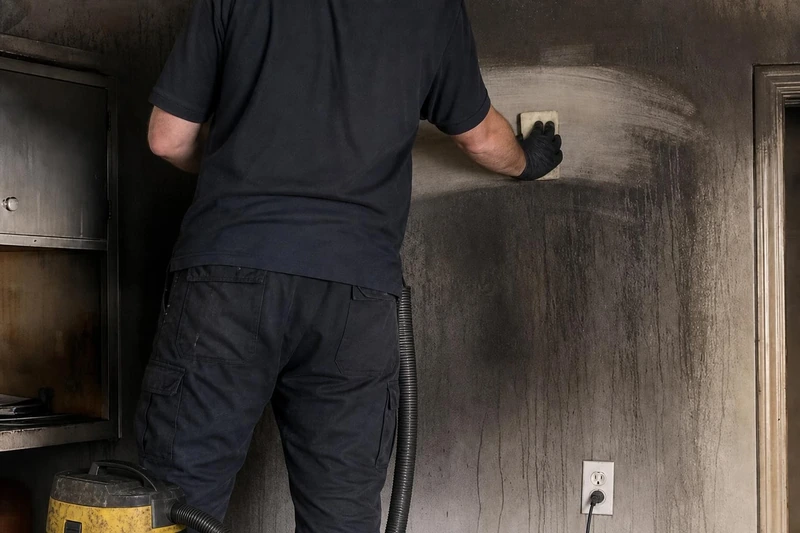
Not all smoke residue behaves the same way, and treating it like it does is how a homeowner ends up with a wall that looks worse after someone tried to clean it. A slow, smoldering fire leaves protein residue that is nearly invisible but carries a sharp, sticky odor. A fast-burning fire leaves dry, powdery soot that smears if you wipe it with the wrong cloth. A fire that took longer to knock down, with more water and chemical involved, leaves a wet, greasy residue that can actually stain plaster and paint on contact. Grabbing a rag and going at any of these the wrong way is exactly how a fire call turns into a repaint job that could have been avoided.
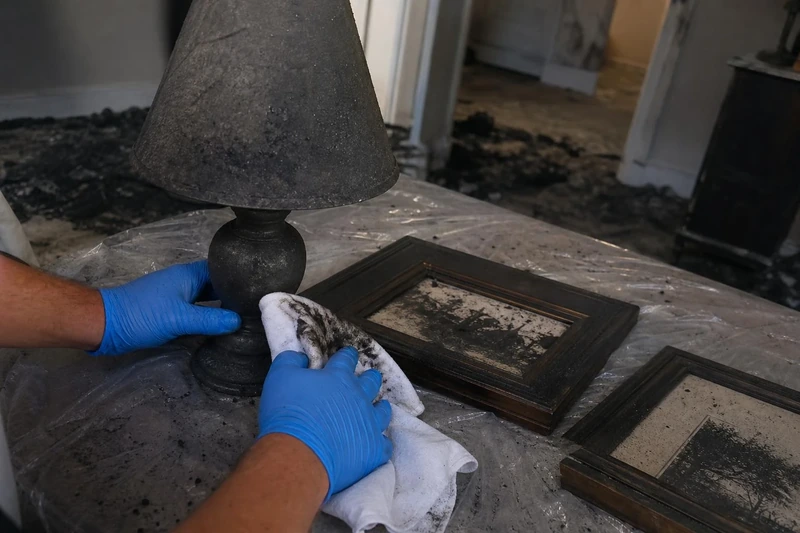
The other split that matters is contents versus structure. Furniture, clothing, electronics, and personal items each clean differently than drywall, framing, and flooring, and some of it needs to come out of the house entirely so it is not sitting in the same air while the structure gets worked on. Our soot-cleanup crew treating a couch the same way it treats a ceiling would be skipping a step, and that step is usually the one that decides whether something in your home is salvageable or not. Real smoke damage cleanup means both sides get their own process, on the same visit.
Why the Water Matters as Much as the Fire
Here is the part that surprises most McKinney homeowners: the water problem after a fire is frequently bigger than people expect, because putting a fire out takes a lot of it. Framing, subfloor, and insulation can end up as saturated as anything from a burst pipe, and McKinney's slab foundations do not make that easier. Water from an upstairs bathroom or attic soak leaves the same wet toe-kicks and soaked subfloor a plumbing leak would, which is why our emergency water removal equipment runs on fire calls almost as often as it runs on burst-pipe calls. Skip that step and a fire job turns into a mold removal job a few weeks later, once trapped moisture behind a wall finally has somewhere to go.
Winter adds its own wrinkle to this. When the National Weather Service's Fort Worth and Dallas forecast office puts out a hard freeze warning for Collin County, space heater fires become one of the more common causes right alongside frozen pipes, and both end up needing the same drying equipment before the job is done. Homes vary by neighborhood too. Older houses around Historic Downtown McKinney in 75069 tend to have older wiring and knob-and-tube remnants that make an electrical fire more likely, while newer two-story builds out in Trinity Falls and Craig Ranch, spanning 75070 and 75071, put a bedroom or laundry room directly over finished space below, so a kitchen fire on the main floor can send water straight down into a ceiling. Stonebridge Ranch, split across 75070 and 75072, has original 1990s sections sitting next to infill built two decades later, and it is the older streets' aging fireplaces and chimneys that tend to carry the bigger fire risk there, not the newer construction closer to the golf course. Whatever started the fire, extraction and structural drying happen in the same visit as the soot cleanup, not as a separate call two days later.
Clearing the Smoke Smell Instead of Covering It Up
An odor job is not about spraying something that smells better over something that smells like smoke. Smoke odor works its way into anything porous, drywall, insulation, wood framing, fabric, and once it is in there, air freshener just sits on top of it until the smell comes back a week later. Getting rid of it for good means treating the source: sealing or removing material that has absorbed too much to clean, and running equipment that actually breaks down the odor in the air and inside the structure itself rather than masking it.
That is also why the timeline on odor work runs longer than people expect. A room can look clean, freshly wiped walls and vacuumed carpet, and still carry a smell days later if the material underneath was never treated. Getting both the surface and what is behind it is the difference between a house that smells normal again and one where every humid McKinney afternoon brings the smoke smell back.
What Gets Restored, What Gets Documented, and Where the Job Ends
Contents and surfaces are where our fire-restoration work actually happens: cleaning soot off walls and ceilings, treating framing and subfloor for odor and moisture, and working through furniture, clothing, and belongings to see what can be cleaned and what cannot. A lot of that comes down to the residue type and how long it sat, so nothing gets promised until someone has looked at the specific damage in your home.
Insurance is part of the job from the first visit, not an afterthought. Photos of the soot pattern, moisture readings from the water side, and a record of what got cleaned versus what got removed all go into a file built for your claim, since homeowners insurance generally covers fire damage that is sudden and accidental rather than something that built up over time. We do not rebuild, reconstruct, or renovate the parts of a house a fire burns through. Our crew cleans, deodorizes, and restores what soot, smoke, and the water used to fight it touched, and if framing or drywall needs to come out and go back in, that is separate contractor work we will tell you to line up. If a fire started on a rooftop or storm damage is part of what happened, that is outside what our crew handles too, and we will point you toward who covers it. For everything inside the house that fire, smoke, and water actually touched, that is the same crew already handling water damage restoration across McKinney, one call for the whole job instead of three separate companies.
Fire Damage Questions McKinney Homeowners Ask
Where to Find Us in McKinney TX
No phone tree when you call, and we give you a straight arrival window before we roll.
Smoke, Soot, or Fire Water Damage? We Start the Cleanup.
Whoever answers skips the hold music and gets soot cleanup, odor removal, and water extraction moving in your McKinney home before it sits any longer.
📞 Call (972) 764-8722