
Why a Small Summer Leak Turns Into Mold in North Texas
A slow leak behind a cabinet or an attic line sweating through a July heat wave rarely looks like an emergency, but Collin County humidity keeps it wet long enough for mold to move in.
📞 Call (972) 764-8722 Now ★★★★★ 5.0 rating on GoogleA dishwasher line that's been weeping behind the cabinet toe-kick for three weeks doesn't look like an emergency. Nobody's standing in water. The floor isn't buckling. It's just a small damp spot that seems to dry by morning, or a faint smell in the kitchen that's easy to blame on the trash, and it gets ignored until the smell starts showing up in the hallway too. That quiet, easy-to-ignore kind of leak is exactly the one that turns into a mold problem in a North Texas summer, and it usually gets there faster than people expect.
This isn't really about the leak itself. Finding it and stopping it is the straightforward part. What matters more is what a slow drip plus a hot, humid Collin County summer does behind a wall while nobody's watching, and where the line sits between still just wet and already growing something that needs to be dealt with. It's the same slow-leak pattern our water damage restoration team in McKinney sees behind kitchen cabinets, laundry rooms, and bathroom walls every summer. If water is actively running right now, that's a different call, our emergency water removal crew handles that side. What follows is the slower version, the one that sneaks up on people.
What Mold Actually Needs to Get a Foothold
Mold spores are already inside every home in McKinney, floating in the air, settled on the paper facing of drywall, sitting in the dust behind an outlet cover. That part isn't unusual or a sign anything's wrong. What a spore needs to actually take hold and spread is a specific combination: a food source it can digest, like the paper on drywall or the wood in a stud, enough warmth to stay active, and consistent moisture. Three of those four are already sitting in every wall cavity in the house. The one that's usually missing is the water, and that's exactly what a slow leak supplies.
Once a spore lands somewhere damp enough, it doesn't take long. Under the right conditions, germination can start within 24 to 48 hours, sending out thread-like structures called hyphae that push into the material and start breaking it down. Those threads network together into a colony, called a mycelium, and once it's established it starts releasing new spores of its own to spread further. A leak that's been running for two or three weeks isn't giving mold a small head start anymore. It's given it enough time to fully move in.
How North Texas Summer Humidity Keeps a Leak From Ever Drying Out
A slow leak in a dry climate has a real chance of losing the fight on its own, evaporating out faster than it accumulates. That's not really how a Collin County summer works. Once the outdoor dew point climbs into the 70s, which is routine here by June, the air's capacity to absorb extra moisture drops, and a damp wall cavity has almost nowhere to send the water it's holding. That's the short version of how humidity grows mold in Texas: the humidity doesn't create the leak, it just removes the one thing that would have dried the area out before mold got a foothold.
Air conditioning adds its own version of the same problem. A supply line running through a hot attic or a return duct sweating in a humid crawlspace can shed condensation onto insulation and framing all summer long, on top of whatever a slow plumbing leak is already contributing nearby. The National Weather Service's Fort Worth/Dallas forecast office tracks exactly how hot and how humid North Texas summers run, and those numbers are a big part of why a leak that would dry out on its own somewhere drier just sits here instead, quietly feeding a small leak mold problem nobody's found yet.
Where These Slow Leaks Actually Hide in a McKinney Home
McKinney's slab foundations change how a slow leak behaves. There's no basement to catch a drip and hold it in one visible spot, so water from a small supply line or a shower pan seal works sideways underneath flooring and up into the nearest wall cavity, often well away from where the leak actually started. By the time a stain or a smell finally gives it away, the wet area is usually bigger than the original problem was.
Housing age shapes where these calls tend to come from. In the newer builds around Painted Tree, inside 75071, an appliance supply line or a shower pan that wasn't sealed quite right during construction is a common source, and it often shows up within the first few summers a house is occupied. Auburn Hills, also 75071, sees a similar pattern in its newer sections, and so does Adriatica, built out mostly in the late 2000s and 2010s. Head into the older 1960s-to-80s streets inside the 75069 downtown core instead, and a slow leak is more likely to come from a supply line or fitting that's simply aged past its expected life, with no single event to point to. Once a wall cavity stays damp through a humid North Texas summer, the original cause stops mattering; the moisture is what feeds the growth.
When a Musty Smell Means the Leak Already Became a Mold Problem
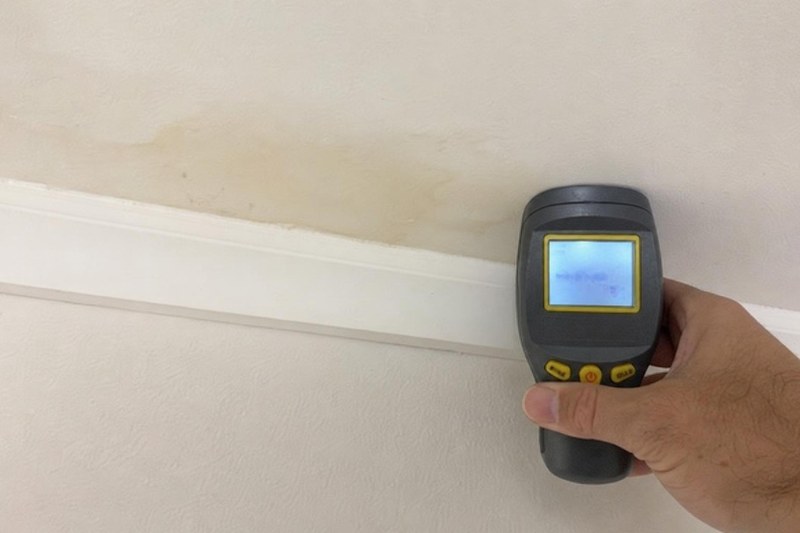
A small leak mold problem usually announces itself with a smell before it ever shows up as a stain. A musty, earthy odor that's stronger in one room, or that gets more noticeable when the air conditioner kicks on, is one of the more reliable early signs, since it means spores are active and releasing byproducts into the air. Discoloration along a baseboard, a soft spot in the flooring near an exterior wall, or paint that's started to bubble in one specific area are usually the visual signs that follow not long after.
If you're at the smell stage, or you've already found visible growth, the next move in Texas isn't a spray bottle. State law requires that separation, an independent assessor apart from whoever does the remediation work, once the affected area passes 25 contiguous square feet, and our policy is to bring in that independent, TDLR-licensed mold assessor first regardless of size, so a written remediation protocol exists before any repair work starts. The Texas Department of Licensing and Regulation lays out exactly how that assessor and remediator split works and why it's built that way. We don't test, inspect, or assess mold ourselves, that has to come from your own independent assessor first. Once you have that report in hand, our mold removal team carries out exactly what it specifies, containment, removal, and drying the area for good.
Questions About Summer Leaks and Mold in North Texas
Found a Musty Smell Behind the Wall? Call Once You Have Your Report.
Bring us the protocol your independent, TDLR-licensed assessor writes and our McKinney crew carries it out, containment through cleanup.
📞 Call (972) 764-8722