
Water Damage in McKinney's New-Construction Homes
A one-year-old McKinney build with a soft spot under the laundry room or a musty smell behind a hallway wall that shouldn't be old enough to have a plumbing problem yet.
📞 Call (972) 764-8722 Now ★★★★★ 5.0 rating on GoogleYour closing was a year ago, maybe two, and the builder's punch list closed out long before the first stain showed up. Then a mark spreads across the laundry room ceiling, or the carpet in a downstairs bedroom stays damp two days after you first felt it underfoot. None of that fits the story you'd expect from a house this young, and that's the trap: new construction water damage in McKinney rarely traces back to old pipe the way it would in a house built near the downtown square forty years ago. It traces back to how fast the house went up in the first place.
Whatever set it off, water sitting in a wall cavity or under a subfloor doesn't wait for the age of the house before it becomes a problem. If it's active right now, that's the same call as any other flooded room. Our emergency water removal crew handles the extraction side the same way whether the house went up in 1985 or last spring.
What Actually Fails Inside a House That's Barely a Year Old
A production-built home goes from foundation to closing in months, and most of the plumbing gets installed, inspected, and covered by drywall inside a tight construction window. That speed is exactly why new build plumbing leaks look different from what an older McKinney house throws at us. A PEX fitting at the manifold that got tightened but never fully seated can hold through a year of normal water pressure before it finally weeps into the wall cavity behind it. A dishwasher or refrigerator line connected during the last week before the final walkthrough can do the same thing on its own timeline.
The foundation adds its own wrinkle. A slab keeps settling for months after the concrete cures, and a plumbing run that was perfectly level at the rough-in inspection can end up with a low point half a year later, exactly where water collects instead of draining. HVAC condensate lines follow a similar pattern. Undersized or poorly sloped in the rush to finish a subdivision on schedule, a clogged line backs up into a closet or attic space before anyone notices the drip.
Winter doesn't spare a new house either. The first hard freeze a McKinney build goes through, usually somewhere between late November and February, is a real test for exposed supply runs in an unheated garage or attic that a punch-list walkthrough never caught. A fitting that held fine through a mild fall can split the first time the temperature actually drops, and the Texas Department of Insurance's winter-prep guidance covers that same freeze exposure every year for exactly this reason.
The First-Year Punch List Homeowners Skip
Builders hand over a punch list at closing, and most buyers walk it with an eye toward paint touch-ups and scuffed trim, not plumbing. A couple of items on that same walk are worth a second look. A shower pan liner that wasn't set correctly during framing can leak for months before tile grout finally shows a stain on the ceiling below. Caulk around a tub surround dries out fast in a new build's first summer, and once it cracks, water gets behind the surround with nowhere to go but down.
Grading is the other overlooked piece. A yard doesn't reach its final grade until sod and landscaping settle, sometimes a full season after move-in, and until then water can pool closer to the foundation than the builder's original plan intended. Irrigation lines trenched too close to the slab add to that risk, especially once a sprinkler head or valve starts leaking underground where nobody notices until the foundation itself is holding moisture it shouldn't.
Trinity Falls, Painted Tree, and the Corridor McKinney Keeps Building
Most of the true new construction in McKinney sits north and east of the older core, in 75071 neighborhoods like Trinity Falls and Painted Tree, and in the 75070 corridor around Craig Ranch where new phases are still being framed today. Each of those developments went from raw land to a finished street inside a handful of years, which means entire blocks of houses hit their first hard freeze, first full summer, and first year of slab settling at almost the same time.
That timing shows up in the calls we get: new home water damage across Collin County tends to cluster in whichever subdivision closed the most units eighteen to thirty months earlier, because that's when the first-year plumbing issues start surfacing at scale. Fast growth changes the ground itself, too. Newly graded lots and streets shift how water moves once a storm hits, part of why the City of McKinney's floodplain management program keeps its maps updated as new phases come online, and why regional watershed management planning treats stormwater capacity as a moving target across the whole growth corridor, not just McKinney's older streets.
Builder Warranty or Homeowners Insurance: Who Actually Pays
The first question after any leak in a new house is whose problem it actually is. Homeowners insurance in Texas generally covers water damage that's sudden and accidental: a supply line that lets go, an appliance connection that fails without warning, the kind of event nobody could have predicted or prevented. A builder's workmanship warranty is a different animal. Most production builders offer some version of the common industry structure, roughly a year of fit-and-finish coverage and a longer window on major systems, though the real terms live in your own closing paperwork, not in anything we can quote you over the phone.
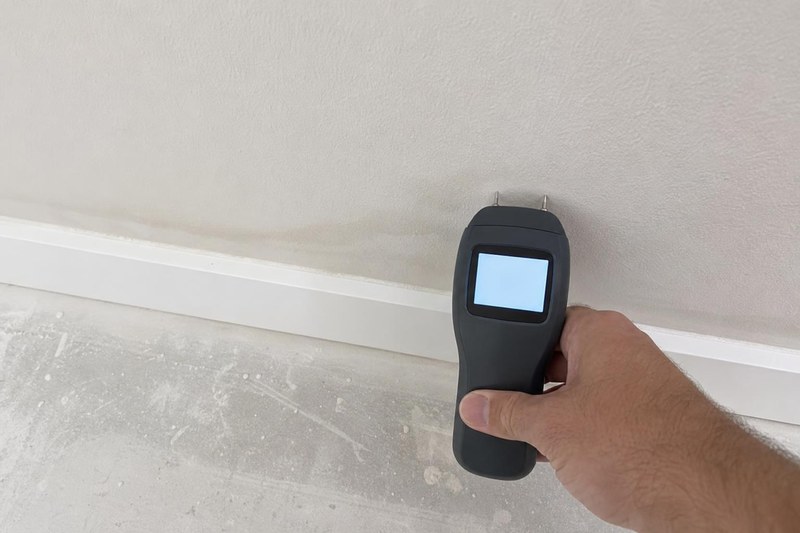
Where it gets messy is proving which one applies. A fitting that failed from ordinary wear reads differently to an adjuster than a fitting that was never seated correctly during construction, and that's a distinction most homeowners don't have the tools to make alone. Photos of the failure point and moisture readings taken while the water is still active build a record that works whether the claim ends up with your insurer, the builder, or both. That habit is worth starting the same day you find water, not after the drywall's already been cut open.
Whatever the cause turns out to be, the extraction and drying itself doesn't change. It's the same water damage restoration McKinney homeowners call on for a decades-old house, run to a moisture reading instead of a guess, no matter how new the drywall behind it is.
New Construction Water Damage Questions McKinney Homeowners Ask
Found Water in a New Build? Call Before It Spreads Further.
A real person answers any hour and walks you through what to shut off while a crew gets moving toward your address.
📞 Call (972) 764-8722